An average company generates millions of security events every day: user sign-ins, network connections, process launches, changes to cloud settings. Somewhere in that stream may hide the first step of an attack. Finding it manually is impossible, so organisations build Security Operations Centers (SOCs) and equip them with SIEM platforms and automation tools.
What a SOC is and how it works
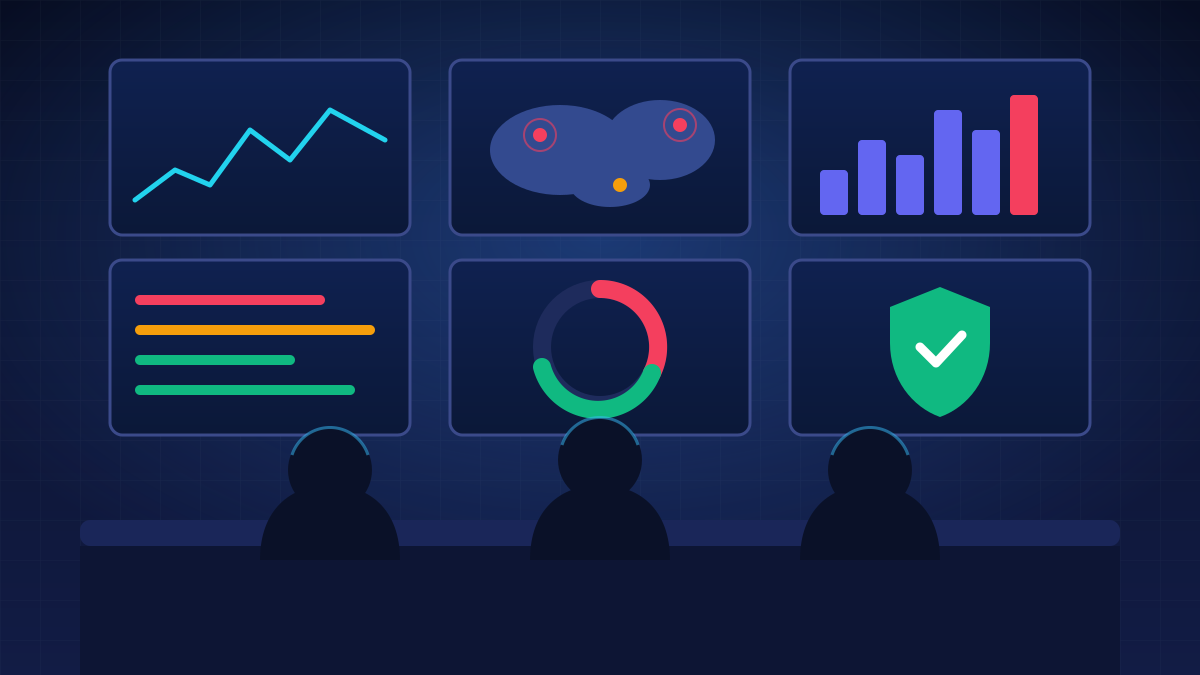
A SOC is a team, a set of processes and the technology that together provide continuous threat detection and response. The work is usually split into tiers:
- L1, first-line analysts, triage alerts, filter out false positives and escalate suspicious cases.
- L2, incident responders, investigate incidents, determine their scope and take containment measures.
- L3, experts and threat hunters, look for hidden attacks, analyse malware and create new detection rules.
SOC effectiveness is measured with MTTD (mean time to detect) and MTTR (mean time to respond). The lower they are, the less time an attacker has.
SIEM and SOAR: the brain and hands of a SOC
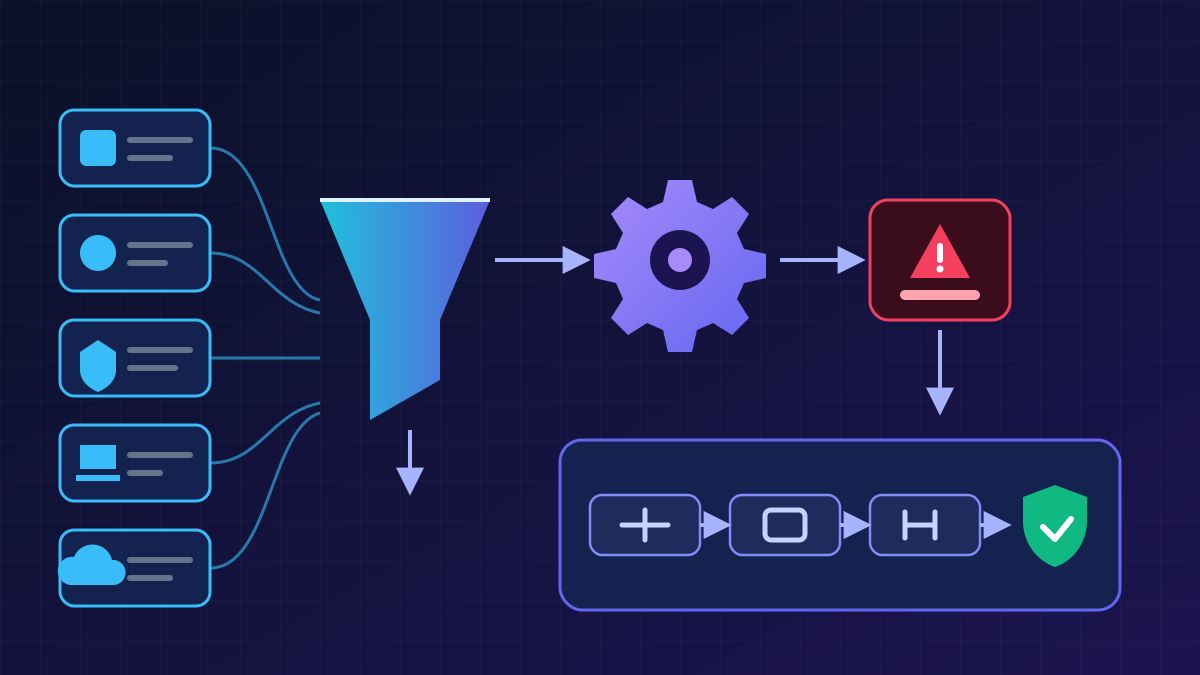
SIEM (Security Information and Event Management) collects logs from every source (servers, workstations, firewalls, the cloud, identity systems), normalises them and hunts for threats using correlation rules and machine learning models. SOAR (Security Orchestration, Automation and Response) runs response playbooks: it automatically enriches an alert with data, disables an account, isolates a device or opens a ticket.
Splunk: flexibility and powerful analytics
Splunk (part of Cisco since 2024) is one of the most widely used platforms for analysing machine data. Splunk Enterprise Security adds SIEM capabilities on top of it:
- The SPL query language lets analysts build complex searches and visualisations over practically any data.
- Risk-Based Alerting does not raise a separate alert for every event; instead it accumulates risk scores for a user or host. An incident is created when the combined risk exceeds a threshold, which significantly reduces “noise”.
- MITRE ATT&CK mapping shows which attacker tactics are covered by detection rules and which are not.
- Splunk SOAR automates routine actions through visual playbooks and hundreds of integrations with other security tools.
Splunk can be deployed on-premises or in the cloud. The main thing to bear in mind is licensing cost, which depends on data volume, so log sources should be chosen deliberately.
Microsoft Sentinel: a cloud SIEM with built-in AI
Microsoft Sentinel is a cloud-native SIEM and SOAR platform built on Azure that requires no servers of your own and scales automatically. Its advantages:
- Ready-made connectors for Microsoft 365, Entra ID, Defender XDR, AWS, Google Cloud and hundreds of third-party solutions.
- The KQL language for threat hunting and building analytics rules.
- Fusion and UEBA, machine learning engines that combine weak signals from different sources into multi-stage incidents and detect anomalous user behaviour.
- Playbooks built on Azure Logic Apps for automated response, from posting a message in Teams to disabling an account.
- A unified portal together with Microsoft Defender XDR and Security Copilot, giving analysts the full picture of an incident in one place.
What automated response looks like in practice
- An employee opens a phishing email and enters their password on a fake page.
- A few minutes later, the SIEM records a sign-in to their account from an unusual country and an attempt to create a mail forwarding rule.
- A correlation rule combines the events into a high-severity incident.
- A SOAR playbook automatically revokes the user’s sessions, forces a password reset, deletes the forwarding rule and blocks the IP address.
- An L2 analyst receives the incident already enriched with data, checks whether other accounts were affected and closes it.
What would take hours manually, automation completes in minutes, and this is exactly where it is decided whether the attacker reaches their goal.
Tips for building a SOC
- Start with the most valuable data sources: identity systems, EDR, email and cloud audit logs.
- Tune rules regularly: too many false alerts lead to “alert fatigue” and missed attacks.
- Automate gradually and document every playbook so that automated actions remain predictable.
- If your in-house team is too small, consider an MDR model or a hybrid SOC with an external partner.
A SIEM without processes is just an expensive log store. Real value comes from combining quality data, tuned rules, automation and people who understand exactly what they are protecting.